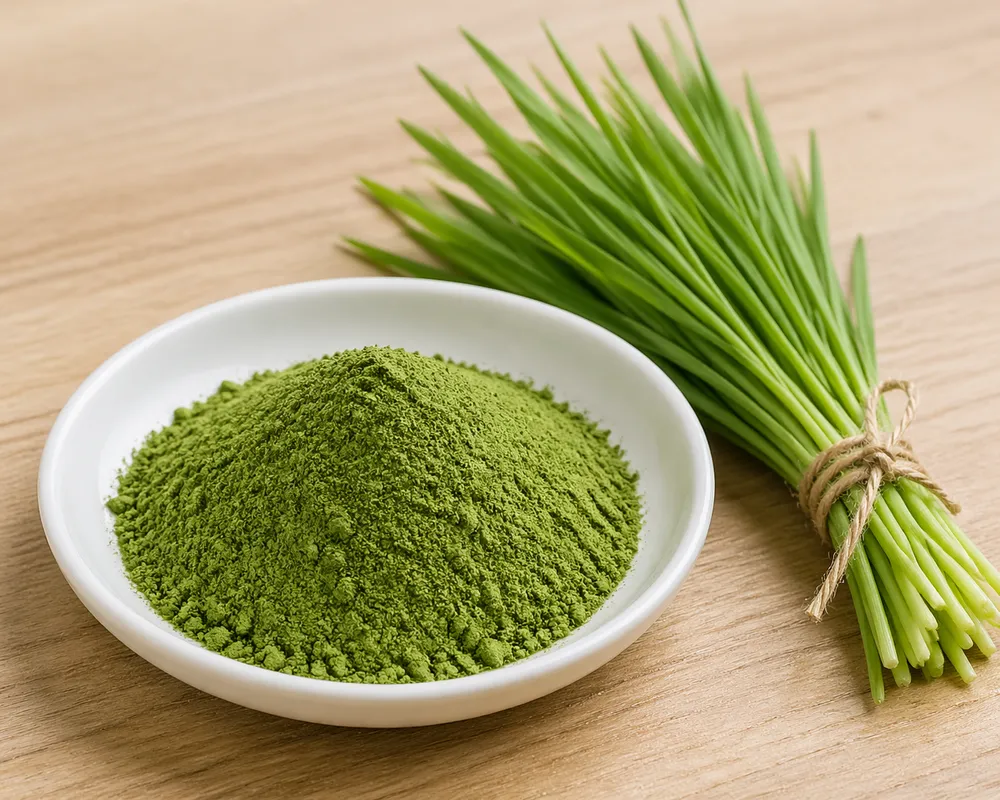
In the rapidly evolving botanical ingredient market, the distinction betweenWhole Leaf PowderandJuice Powderis more than just a matter of texture—it’s a strategic choice that defines a product’s nutrient density, bio-availability, and manufacturing efficiency.
As a senior supplier specializing in Barley Grass Powder,ToNutraprovides this deep-dive analysis to help R&D teams and procurement managers select the optimal grade for their specific applications.
1. Defining the Core Difference
What is Whole Leaf Powder?
Whole leaf powder is produced by harvesting young cereal grasses or botanicals at their nutritional peak (the jointing stage). The raw material is washed, dehydrated at low temperatures, and then micro-milled into a fine powder. This method preserves theentire plant matrix, including the valuable insoluble fibers.
What is Juice Powder?
Juice powder represents a concentrated essence. The fresh botanicals are first cold-pressed to extract the liquid “blood” of the plant. The tough, fibrous cellulose is discarded, and the remaining nutrient-rich juice is spray-dried into a highly soluble powder. It often requires a concentration ratio, such as20:1 or 33:1, meaning it takes 33kg of fresh grass to produce 1kg of juice powder.
2. Technical Comparison Matrix
| Technical Attribute |Whole Leaf Powder|Juice Powder (High Potency)| :--- | :--- | :--- |Concentration Ratio| 1:1 (Full Spectrum) | 20:1 to 33:1 (Concentrated) |Solubility Index| Low (Forms a stable suspension) |100% Instant Solubility|Fiber Profile| High Cellulose & Hemicellulose (30%+) | Negligible Fiber (<5%) |Active Enzymes| Natural levels preserved |Ultra-high SOD & Vital Enzymes|Chlorophyll Density| Standard (Natural Green) |Deep Emerald (Hyper-pigmented)|Mesh Size| Typically 80-200 Mesh | Typically 80-120 Mesh (Spray-dried) |Mouthfeel| Grassy, slightly textured | Smooth, savory, “Umami” notes |
3. Deep Dive: Nutritional & active Potency
The Enzyme Advantage (Juice Powder)
For premium supplement brands,**Superoxide Dismutase (SOD)**and other heat-sensitive enzymes are the primary selling points. Because Juice Powder removes the “dead weight” of cellulose, the concentration of these bio-actives is significantly higher per gram. This allows for a smaller serving size while maintaining superior efficacy.
The Fiber Synergy (Whole Leaf Powder)
Whole Leaf Powder is the hero ofDigestive Healthformulations. The insoluble fiber acts as a prebiotic, supporting gut microbiome diversity. It also provides a “slow-release” effect for the nutrients trapped within the plant’s cellular structure, mimicking a whole-food diet.
4. Manufacturing & Formulation Logic
When to Formulate with Whole Leaf:
- **Capsules & Tablets:**Where the ingredient is compressed; volume and fiber contribute to the structural integrity and cost-efficiency.
- **Meal Replacements:**Where “satiety” and “full-plant nutrition” are key marketing claims.
- **Pet Nutrition:**Providing essential roughage for carnivorous digestive tracts.
When to Formulate with Juice Powder:
- **RTD (Ready-to-Drink) Beverages:**Essential for a sediment-free, clear, and visually appealing drink.
- **Stick Packs & Instant Greens:**Consumers demand instant dissolution without the “sandy” texture associated with leaf fibers.
- **High-End Anti-Aging Supplements:**Where the highest concentration of antioxidants is required in a minimal dosage.
5. Economic Impact: ROI for Procurement
WhileJuice Powdercarries a higher price point per kilogram, theValue per Active Unitis often superior for high-end applications.
- **Shipping & Storage:**You are effectively shipping “pure actives” rather than “bulk fiber,” potentially reducing logistics costs for international brands.
- Marketing Premium:“Juice Powder” is perceived by consumers as a more refined, premium-tier ingredient, allowing for higher retail margins.
6. ToNutra’s Quality Commitment
Whether you choose our Barley Grass Juice Powder or our Whole Leaf variant,ToNutraensures:
1.**Low-Temperature Drying:**We use proprietary technology to keep the temperature below 45°C, ensuring enzymes remain “living.” 2.**Strict Compliance:**All batches are backed by NOP/EU Certificates. 3.**Physical Purity:**10,000-gauss magnetic separation and X-ray inspection to remove any foreign matter.
Conclusion: Making the Strategic Choice
The choice between Leaf and Juice powder depends entirely on yourend-user’s experience. Do they want a “whole-food fiber” experience, or an “instant, high-potency” boost?**Ready to test?**We recommend a “Dual-Sample Protocol.” Contact ToNutra’s technical team to request samples of both grades to conduct a side-by-side solubility and stability test in your lab.
Request Your Formulator’s Sample Kit
Trying to decide between Whole Leaf and Juice Powder? ToNutra offers a specialized**“Formulator’s Kit”**which includes:
- 50g Barley Grass Whole Leaf Powder(200 Mesh)
- 50g Barley Grass Juice Powder(33:1 Concentration)
- **Latest COA (Certificate of Analysis)**with heavy metal and pesticide test results.