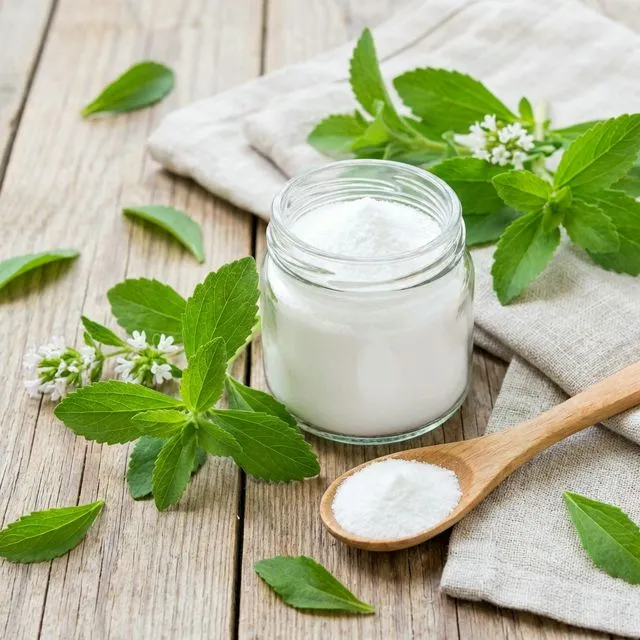
The Sugar-Free Revolution
As taxes on sugary beverages rise and health consciousness grows, formulators are turning to natural, zero-calorie sweeteners. The two heavyweights areSteviaandMonk Fruit (Luo Han Guo).
Stevia: The Market Leader
Extracted from the leaves of Stevia rebaudiana.
- **Sweetness:**200x - 300x sweeter than sugar.
- **Pros:**Very low cost; widely authorized globally; high supply stability.
- **Cons:**Notorious “bitter” or “licorice” aftertaste, especially in cheaper grades (Reb A 80% vs Reb M).
Monk Fruit: The Premium Choice
Extracted from the gourd of Siraitia grosvenorii.
- **Sweetness:**150x - 250x sweeter than sugar (depending on Mogroside V content).
- **Pros:**Clean taste profile; no bitter aftertaste; consumer-friendly image.
- **Cons:**Significantly more expensive (5x-10x cost of Stevia); limited growing region (mostly Guangxi, China).
Formulation Strategy
- **Cost-Driven:**Use Stevia (Reb A 97% or Reb D).
- **Flavor-Driven:**Use Monk Fruit.
- **The Hybrid Approach:**Many brands blend Stevia and Monk Fruit. Stevia provides the upfront sweetness, while Monk Fruit masks the bitter aftertaste of Stevia, creating a balanced profile at a moderate cost.
ToNutra supplies both Stevia and Monk Fruit extracts to help you hit the “sweet spot” in your formulation.