The “Fairy Dusting” Epidemic
In the supplement industry, trust is good, but testing is valid. “Fairy dusting” refers to the practice of adding a minuscule amount of an active ingredient just to claim it on the label, or selling a generic brown powder as a premium extract.
For a quality manager, the Certificate of Analysis (COA) is the first line of defense. But knowing how to read it—and what is often hidden—is a skill.
1. ID Testing: Is it the right plant?
Before checking potency, you must verify identity.
- **TLC (Thin Layer Chromatography):**A qualitative test. It compares the visual “fingerprint” of the sample against a reference standard. Good for basic ID (e.g., “Is this Rhodiola?”).
- **HPTLC:**High-Performance TLC. More precise, can detect adulteration with closely related species.
- **DNA Barcoding (TRU-ID):**The ultimate test for raw biomass. However, it often fails on extracts because the DNA is destroyed during extraction.
- Red Flag: A supplier who refuses to provide an ID test for a generic powder.
2. Assay / Potency: Is it strong enough?
- **UV-Vis (Ultraviolet-Visible Spectroscopy):**Cheap and common, but non-specific. It reacts to a class of compounds.
- Example: Identifying “Grape Seed Extract 95% OPCs” via UV might actually count peanut skin extract or pine bark as positive because they are chemically similar.
- **HPLC (High-Performance Liquid Chromatography):**The gold standard. It separates and measures specific molecules.
- Buyer’s Note: Always prefer HPLC for expensive ingredients (Ginsenosides, Curcuminoids, Silymarin). UV is acceptable for general screening but easy to fool.
3. The “Ratio” Myth (4:1 vs. 10:1)
We often see “10:1 Extract” sold at a premium.
- The Claim:“We used 10kg of herb to make 1kg of extract.”
- **The Reality:**There is no lab test to prove a ratio. Once extracted, a 4:1 and a 10:1 of the same plant often look chemically identical on basic tests.
- **The Risk:**Unscrupulous suppliers verify “Ratio” simply by adding fillers (Maltodextrin) to dilute the extract.
- The Fix:BuyStandardized Extracts(e.g., “Ashwagandha 5% Withanolides”) whenever possible. This is a verifiable chemical number, not a manufacturing claim.
4. Heavy Metals & Contaminants
Plants are bio-accumulators. They suck up everything from the soil.
- **The Big 4:**Lead (Pb), Arsenic (As), Cadmium (Cd), Mercury (Hg).
- **Prop 65 (California):**The strictest standard globally. Often requires Lead < 0.5 ppm.
- **Pesticides:**Essential for claims. Ask for a massive panel (500+ pesticides) screen, like the USP <561> or Eurofins analytical suites.
5. Solvent Residues
Extracts are made using solvents: Water, Ethanol, Methanol, or Acetone.
- **Class 1 Solvents (Benzene, Carbon Tet):**Carcinogenic. Should NEVER be used.
- **Class 3 Solvents (Ethanol, Acetone):**Generally safe (GRAS) but must be below 5000 ppm.
- **The “Water Only” Claim:**If a supplier claims an extract is “Water Only” but it contains high levels of non-polar compounds (like Curcumin), be skeptical. Physics dictates you need specialized technology or a co-solvent to extract those.
Summary Checklist for Buyers
When approving a new vendor, demand: 1.**3-Batch COA Validation:**Consistency across time. 2.**Third-Party Lab Reports:**Do not rely solely on the factory’s internal lab. 3.**Method of Analysis:**Ensure they utilized HPLC for potency, not just generic UV.
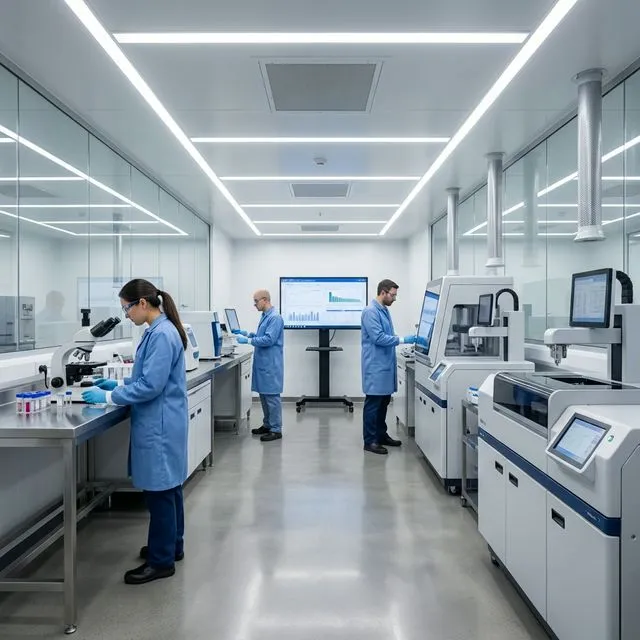
AtToNutra, our in-house lab is equipped with Agilent HPLC and ICP-MS systems to ensure every drum leaving our warehouse meets the strictest safety and potency standards.