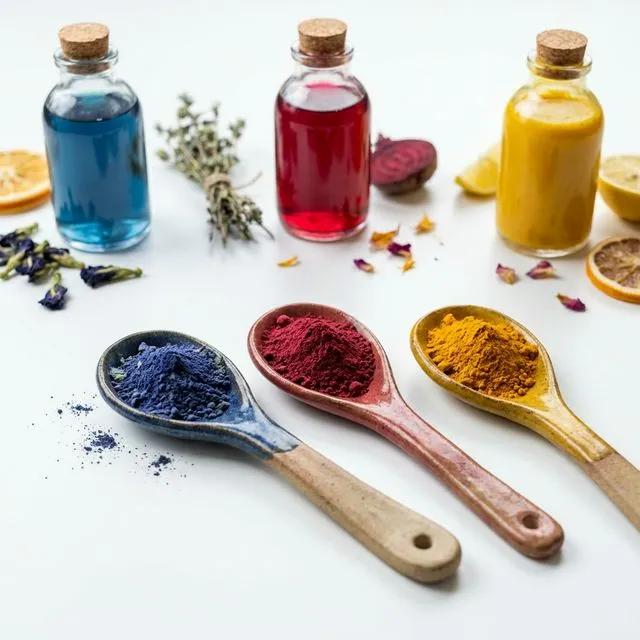
The End of “Red 40” and “Blue 1”
Gone are the days when neon-colored sodas full of artificial dyes were acceptable. Today’s consumers, especially Gen Z and Millennials, read labels. They want vibrant colors that are “Instagrammable,” but they demand that those colors come from nature.
This shift presents a massive opportunity for brands to formulate with “Functional Colors”—ingredients that provide both pigment and health benefits.
1. The Blue Revolution: Butterfly Pea Flower
For decades, creating a natural blue was the holy grail of food science. Enter Butterfly Pea Flower (Clitoria ternatea).
- The Color: A deep, mesmerizing indigo blue.
- The Magic: It is pH-sensitive. Add an acid (like lemon juice), and it transforms instantly into a vibrant purple/pink.
- Health Benefit: Rich in anthocyanins and antioxidants.
- Application: Cocktails, color-changing teas, and “galaxy” themed beverages.
2. The Cyan Stunner: Phycocyanin (Blue Spirulina)
Derived from Spirulina, this is the only natural sky-blue pigment available.
- The Color: Electric, neon cyan.
- The Challenge: It is heat sensitive. Best used in cold applications like smoothie bowls and ice cream.
- Health Benefit: Known for its immune-boosting and anti-inflammatory properties.
3. The Classic Red: Beet Root
While not new, Beet Root is experiencing a renaissance as a replacement for Red 40.
- The Color: Deep magenta to soft pink, depending on concentration.
- The Flavor Challenge: Beets have a strong earthy taste. Modern high-quality powders (like ToNutra’s) are processed to minimize this flavor while retaining the color.
- Application: Red velvet cakes, pink lattes, and berry-flavored gummies.
4. The Golden Glow: Turmeric
Turmeric (Curcumin) is the gold standard for yellow/orange.
- The Color: Bright, sunny yellow.
- The Tip: Turmeric is not water-soluble on its own. Look for water-dispersible formulations for beverages to avoid a “ring” around the bottle.
Formulating for the Future
Switching to natural colors isn’t just a trend; it’s a requirement for the modern shelf. By using ingredients like Butterfly Pea and Phycocyanin, you aren’t just removing an additive; you are adding a superfood story to your product.
Ready to color your next creation? Explore ToNutra’s range of vibrant fruit and vegetable powders.