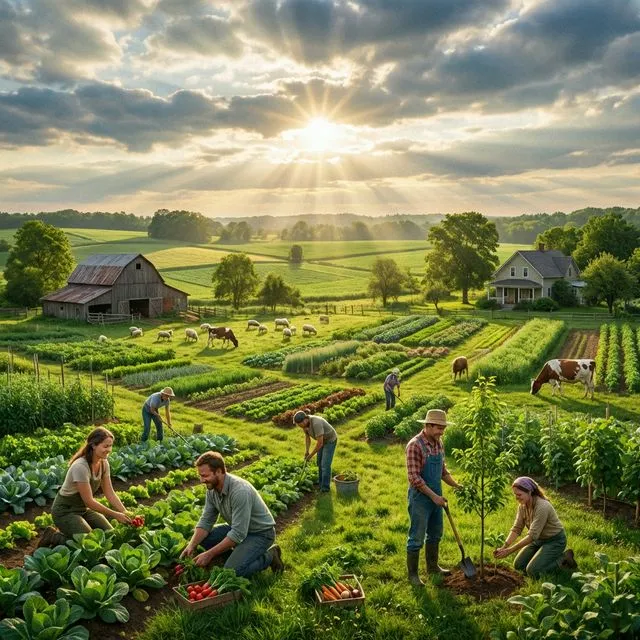
In an industry often clouded by vague claims like “all-natural” and “pure,” we believe transparency is radical. When you scoop a serving of pea protein or stir mushroom powder into your coffee, do you know where it came from? Do you know whose hands harvested it?
At ToNutra, we don’t just buy ingredients; we build relationships. “From Farm to Shelf” is our promise of complete traceability, ethical sourcing, and environmental stewardship.
Phase 1: The Soil (The Foundation)
Great nutrition starts with healthy soil. We partner exclusively with certified organic farms that practice regenerative agriculture. This means they don’t just avoid harmful pesticides—they actively improve the health of the land.
Why Regenerative? Conventional monoculture farming strips the soil of nutrients, leading to crops that are less nutrient-dense. Regenerative practices like cover cropping, crop rotation, and composting restore the soil microbiome.
Our Standards:
- Certified Organic: No synthetic fertilizers, pesticides, or GMOs. Period.
- Heavy Metal Testing: Soil is tested before planting to ensure it is free from industrial contaminants like lead, arsenic, and cadmium. This is crucial for root vegetables and mushrooms which are bio-accumulators.
- Water Conservation: Our partner farms utilize drip irrigation and rainwater harvesting to minimize water usage.
Phase 2: The Farmers (Fair Trade Partnerships)
Sustainability isn’t just about the environment; it’s about people. We source our ingredients from regions where they grow naturally and abundantly—Maca from the high Andes of Peru, Turmeric from the rich soils of India, and Matcha from historical tea estates in Japan.
We believe that the farmers who nurture these crops deserve to thrive.
Fair Trade Impact:
- Fair Wages: We pay a premium above market price to ensure farmers earn a living wage, not just a survival wage.
- Community Investment: A portion of our proceeds goes directly back into community projects, such as building schools and improving healthcare access in farming villages.
- Respect for Tradition: We work with farmers who have generations of knowledge. We don’t dictate how they farm; we learn from them and support them with modern quality control tools.
Phase 3: The Journey (Minimizing Footprint)
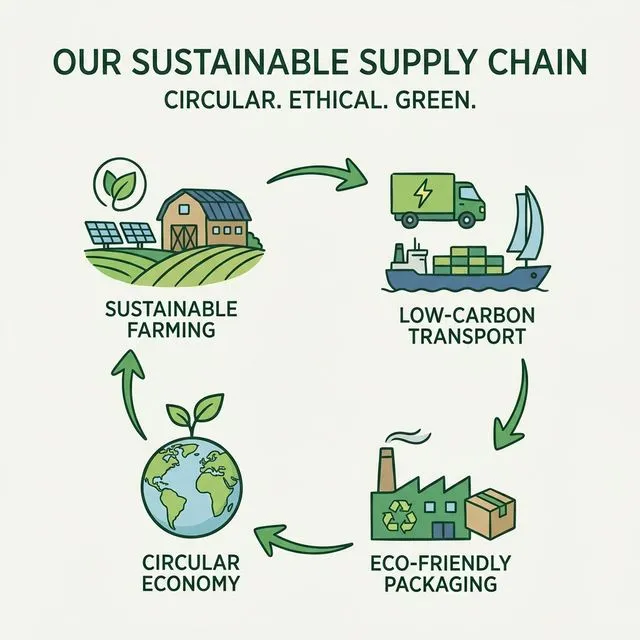
Transporting ingredients across the globe has a carbon cost. We are committed to minimizing this impact through smart logistics and packaging innovation.
Carbon Reduction Strategies:
- Sea Freight Over Air: Whenever possible, we ship via ocean freight, which has a significantly lower carbon footprint than air transport.
- Compact Processing: We process and extract ingredients close to the source. Converting 10kg of raw mushrooms into 1kg of extract powder before shipping reduces shipping weight and volume by 90%.
- Eco-Packaging: Our bulk packaging is biodegradable, and our consumer packaging is made from post-consumer recycled (PCR) materials. We are currently piloting a fully compostable pouch made from plant cellulose.
Phase 4: The Verification (Trust Through Testing)
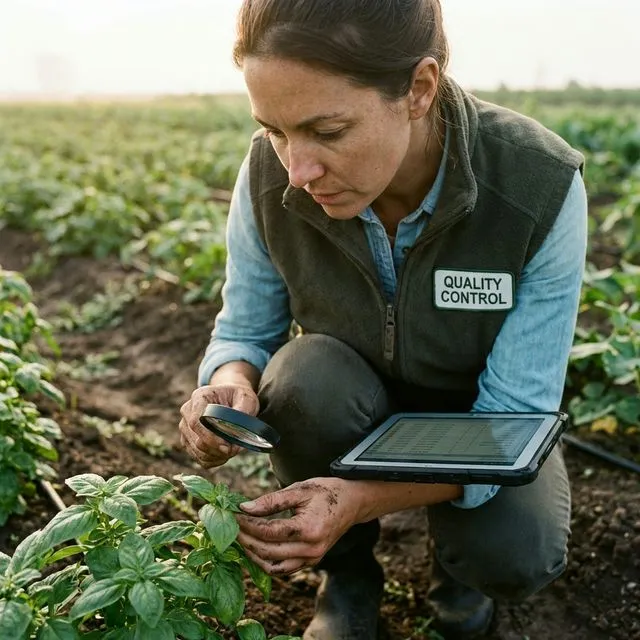
Traceability means nothing without verification. We employ a rigorous “Triple-Test Protocol” to ensure that what’s on the label is exactly what’s in the bag.
- Test 1 (At the Farm): Raw materials are tested for identity (is it the right plant?) and purity (no pesticides) before they leave the farm.
- Test 2 (During Production): We monitor strict hygiene and temperature controls during extraction to prevent microbial contamination.
- Test 3 (Third-Party Lab): The final product is sent to an independent ISO-accredited lab. We test for:
- Potency: Verifying active compounds (e.g., 95% Curcuminoids).
- Purity: Screening for heavy metals, mold, and bacteria.
- Solvents: Ensuring no residual solvents remain from the extraction process.
The Future of Sourcing
We are constantly pushing the boundaries of what sustainable sourcing looks like. Our 2030 goal is to be Carbon Negative—removing more carbon from the atmosphere than we emit.
We are investigating:
- Upcycled Ingredients: Turning food waste (like fruit peels) into potent nutraceuticals.
- Vertical Farming: Growing sensitive botanicals in controlled indoor environments to reduce land and water use.
- Blockchain Traceability: Giving you the ability to scan a QR code on your package and see the exact journey of your specific batch.
“Sustainable” isn’t a destination; it’s a journey. And we’re honored to have you on this path with us.